
March 2026
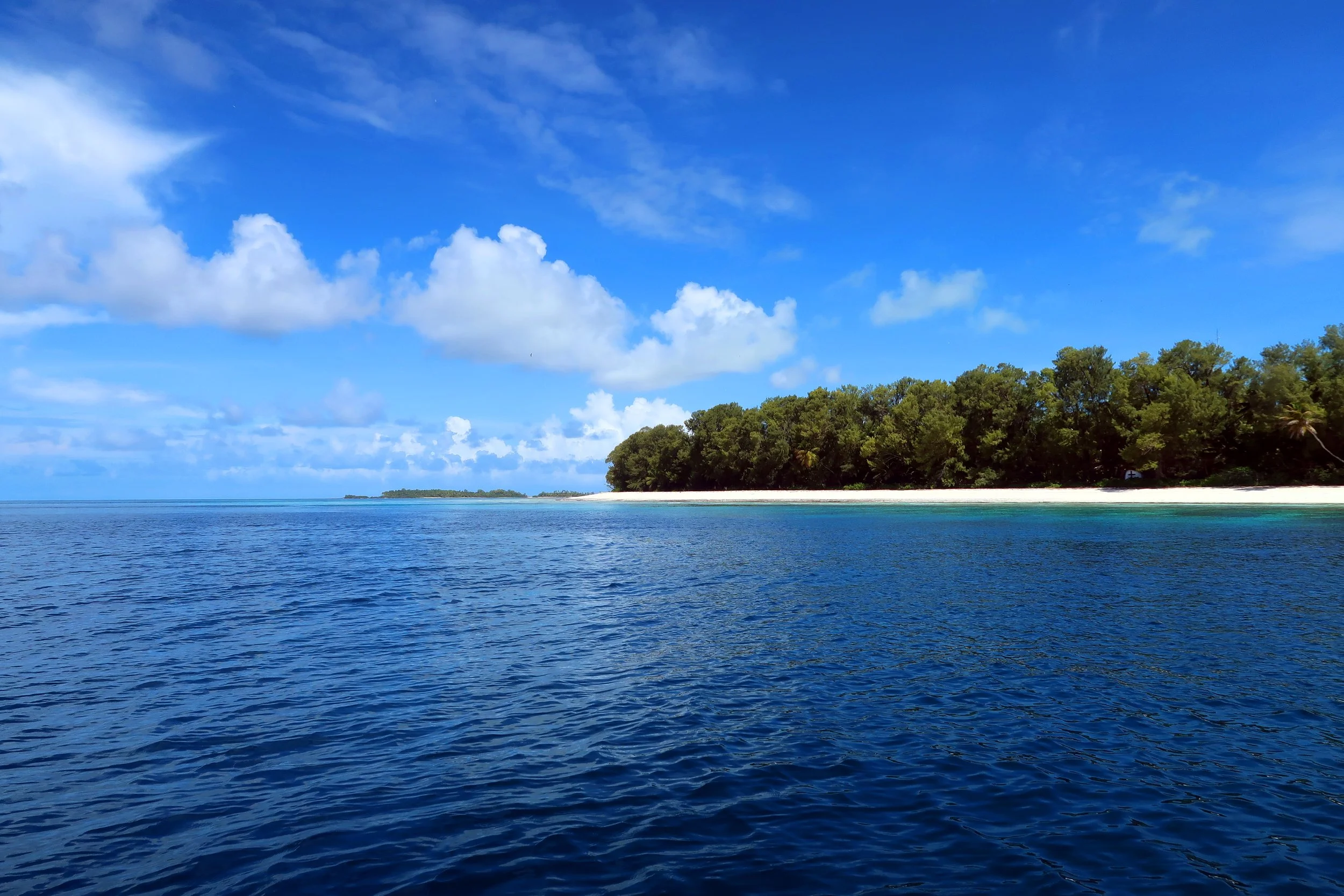
The remote island of D’Arros is home to the largest known aggregation of reef manta rays in Seychelles. New research, led by the Save Our Seas Foundation D’Arros Research Centre (SOSF-DRC), shows that a consistent supply of plankton sustains reef mantas throughout the year and reveals when and where the rays feed around the island. This information not only helps to tailor regulations that will protect surface-feeding mantas but also emphasises the importance of D’Arros for this vulnerable species.
D’Arros is also home to the Seychelles Manta Ray Programme (SMRP), a collaboration between SOSF-DRC and the Manta Trust and one of the Trust’s long-standing affiliate projects. The programme focuses on understanding and protecting manta rays across Seychelles, helping build a broader picture of how these animals use the island’s remote waters.
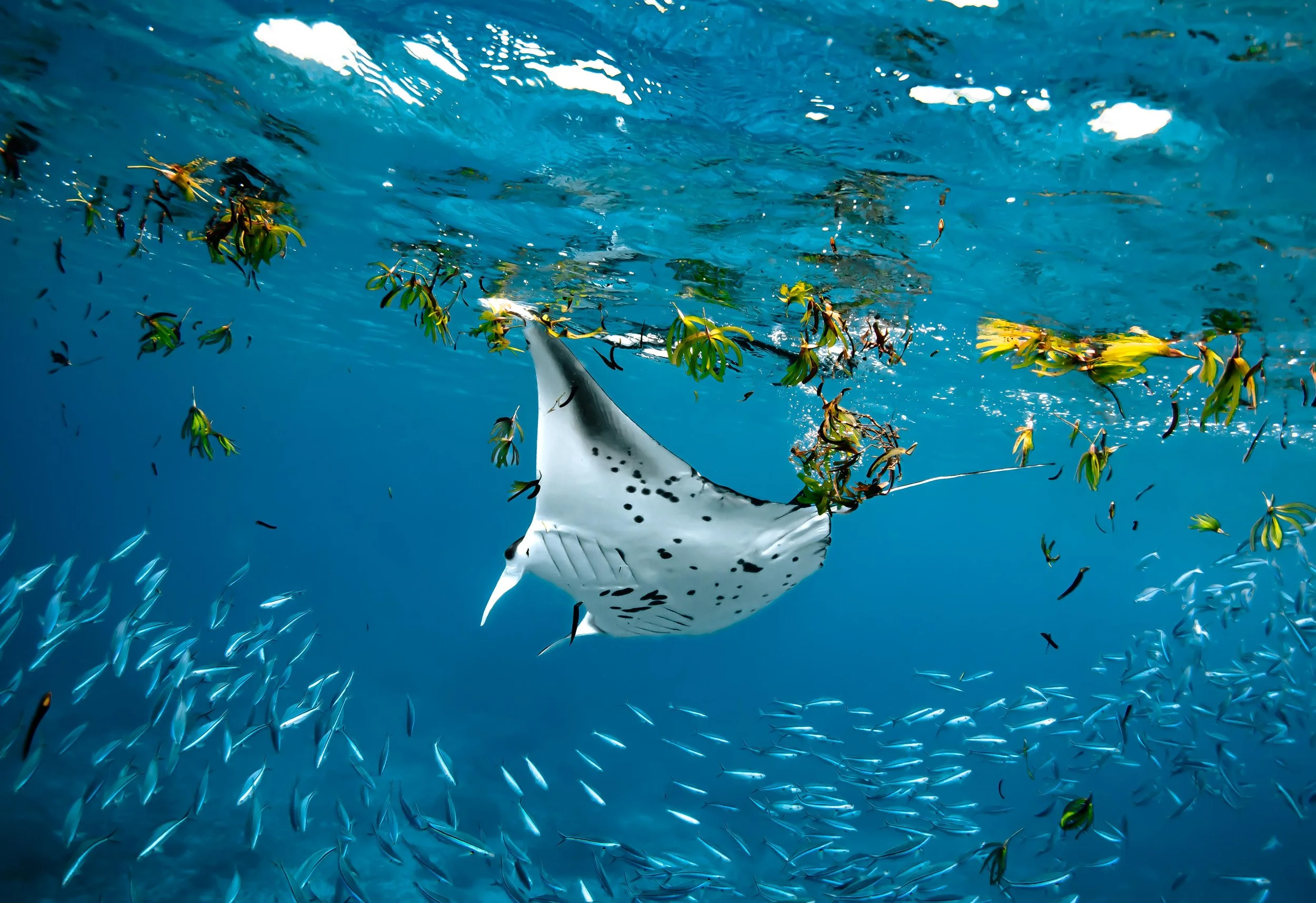
Photo by: Dillys Pouponeau | © Save Our Seas Foundation.
From the window of her ocean-front lab at the SOSF-DRC, Seychellois scientist Dillys Pouponeau can see her study subjects – reef manta rays – as they dance just beneath the water’s surface, feasting on minute organisms known as zooplankton. It’s a sight that can be seen almost every day, setting D’Arros apart from other locations in the world, where manta feeding aggregations appear to be more seasonal. ‘Because food is available all year round, the mantas are supported throughout the year,’ explains Dillys, who is a research officer for the SOSF-DRC. ‘This gives D’Arros, which is a Zone 1 Marine Protected Area, exceptional value and underscores why continued efforts to protect it are so important.’
The continuous supply of plankton is one of the major findings from the new study, led by Dillys and published in the journal Frontiers in Marine Science. It demonstrates that combined with other important factors, such as the presence of cleaning stations and lack of predators, the availability of food explains why these remote waters attract reef manta rays every month of the year.
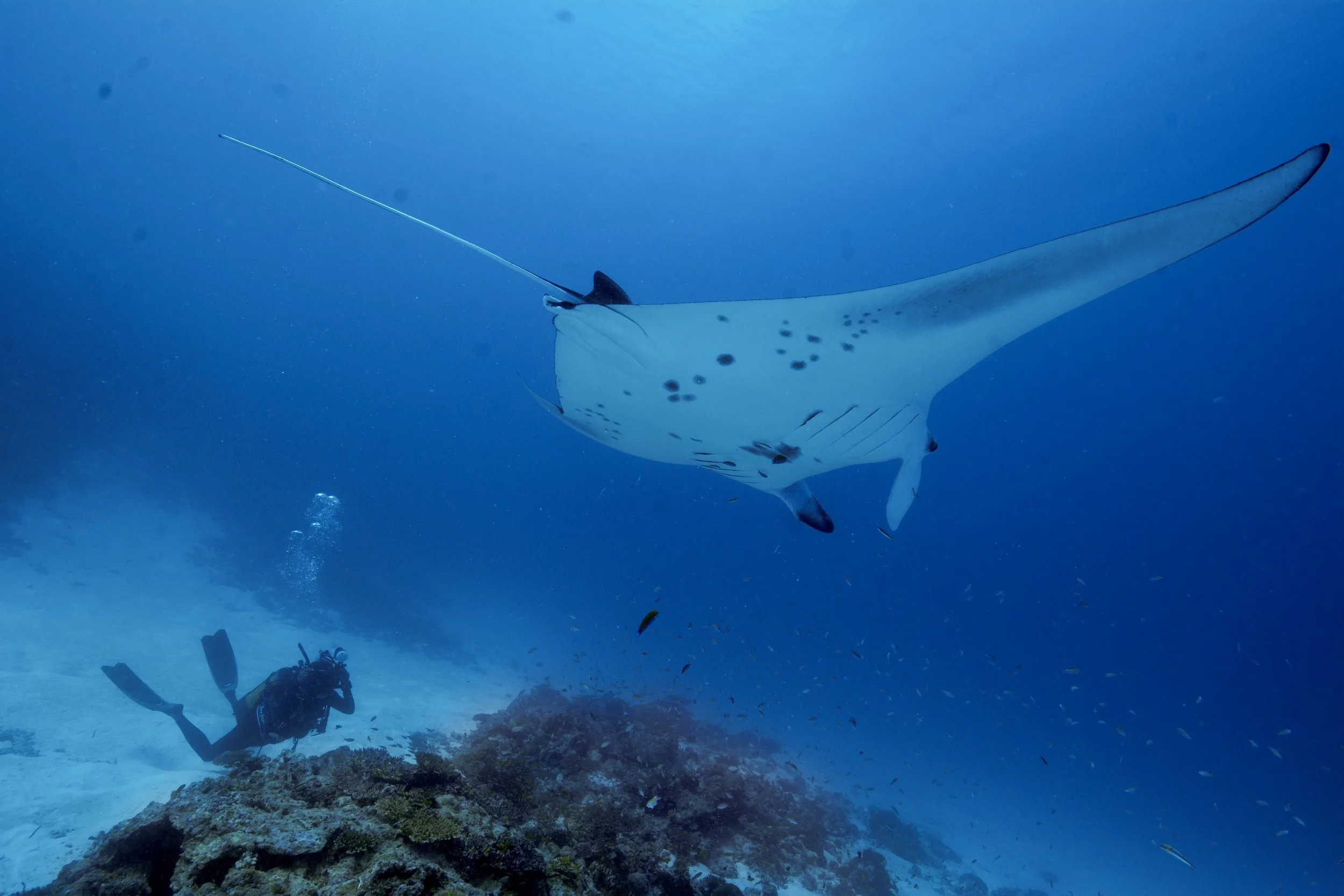
Photo by: Henriette Grimmel | © Save Our Seas Foundation.
However, the simple presence of plankton is not enough. By conducting weekly manta surveys, observing their behaviour and taking samples of the plankton-rich sea water, Dillys and her colleagues were able to show that reef mantas only start feeding when and where plankton is highly concentrated and exceeds a certain threshold. This makes sense when you consider that for filter-feeding reef manta rays, feeding expends a lot of energy. They are continuously swimming with their mouths agape, using specialised fins to funnel water inside. Then sieve-like structures within the mouth catch tiny animals – copepods, shrimps, krill and crab larvae, collectively known as zooplankton – while the remaining seawater is filtered back out through the gills. An adult reef manta ray can also reach more than four metres (13 feet) in width, which means they must consume vast quantities of their microscopic prey to sustain themselves.
It’s like deciding to go to your favourite restaurant – the menu must be just right to warrant making the effort.
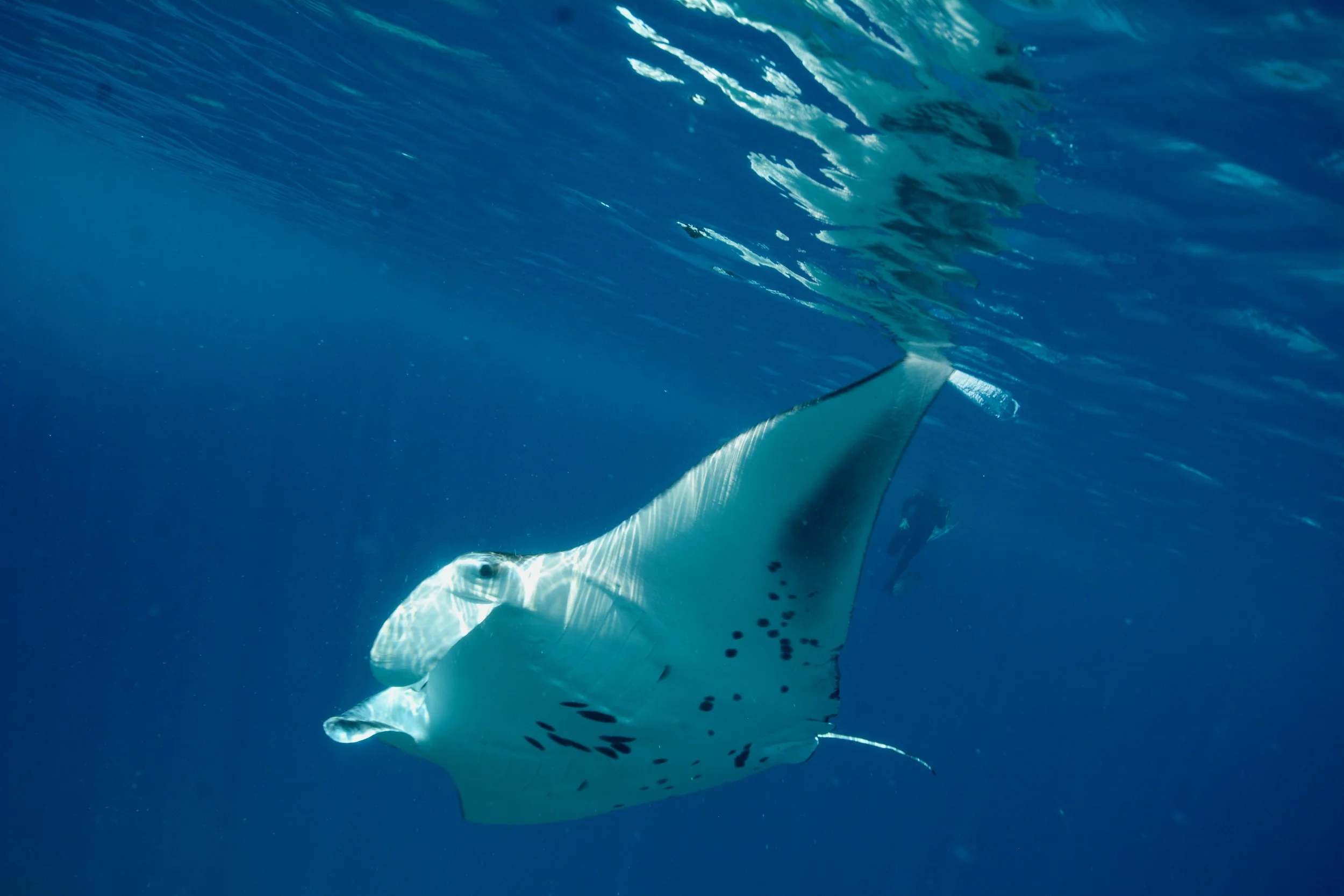
Photo by: Dillys Pouponeau | © Save Our Seas Foundation.
The study also found that the densest patches of zooplankton coincide with the high tide – between two hours before and five hours after – and that these times were when the reef mantas were observed feeding the most. Furthermore, feeding behaviour was more commonly sighted on the north to north-eastern side of the island.
These findings will be crucial in optimising conservation efforts around D’Arros. In recognition of their exceptional biodiversity and global ecological importance, the waters surrounding the island have been designated as a Zone 1 Marine Protected Area or ‘no-take’ zone, where extractive activities like industrial fishing are prohibited. ‘Effective conservation practices rely heavily on detailed understanding of a species,’ says Dillys. ‘Research like this provides exactly that by identifying where, when and why mantas use the island. With this information, we can better design and implement regulations within the marine protected area that directly support their conservation, particularly by limiting activities that may interfere with their behaviour.
‘For example, boats sometimes cross these areas. Regulations on boat zoning and speed are therefore essential to minimise disturbances to surface-feeding mantas to reduce the risk of boat strikes, a threat recognised globally and one that has occurred in Seychelles before.’
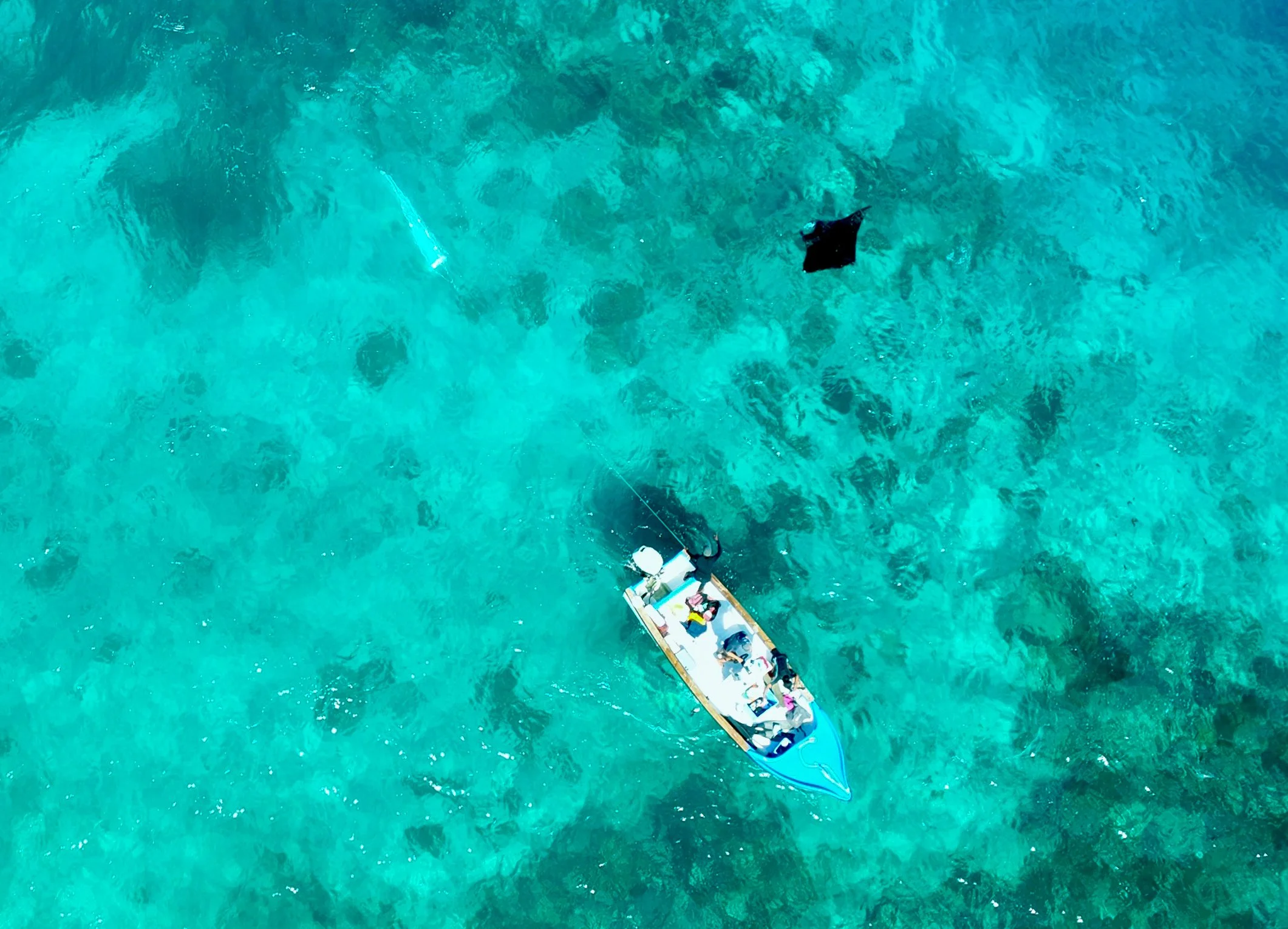
Photo by: Henriette Grimmel | © Save Our Seas Foundation.
The secluded waters of D’Arros Island offer the perfect opportunity to study these iconic creatures, which unfortunately are under threat. Reef mantas are keystone species and therefore ecologically vital; their decline would have serious consequences for underwater systems. For Dillys, understanding more about the mantas and their requirements is imperative. ‘We need them in the ecosystem to maintain critical ecological functions,’ she explains. ‘This knowledge helps us to protect not only the reef manta rays, but also the broader ecosystems they support.’
This sentiment was central to the vision of the founder of the Save Our Seas Foundation, Abdulmohsen Abdulmalik Al-Sheikh, when he established the SOSF-DRC. ‘D’Arros is truly special and it was important to me to create a world-class field station capable of gaining the knowledge we need to adequately protect it,’ says the founder. ‘That research is now having real conservation impact and will preserve the magic of D’Arros for generations to come.’
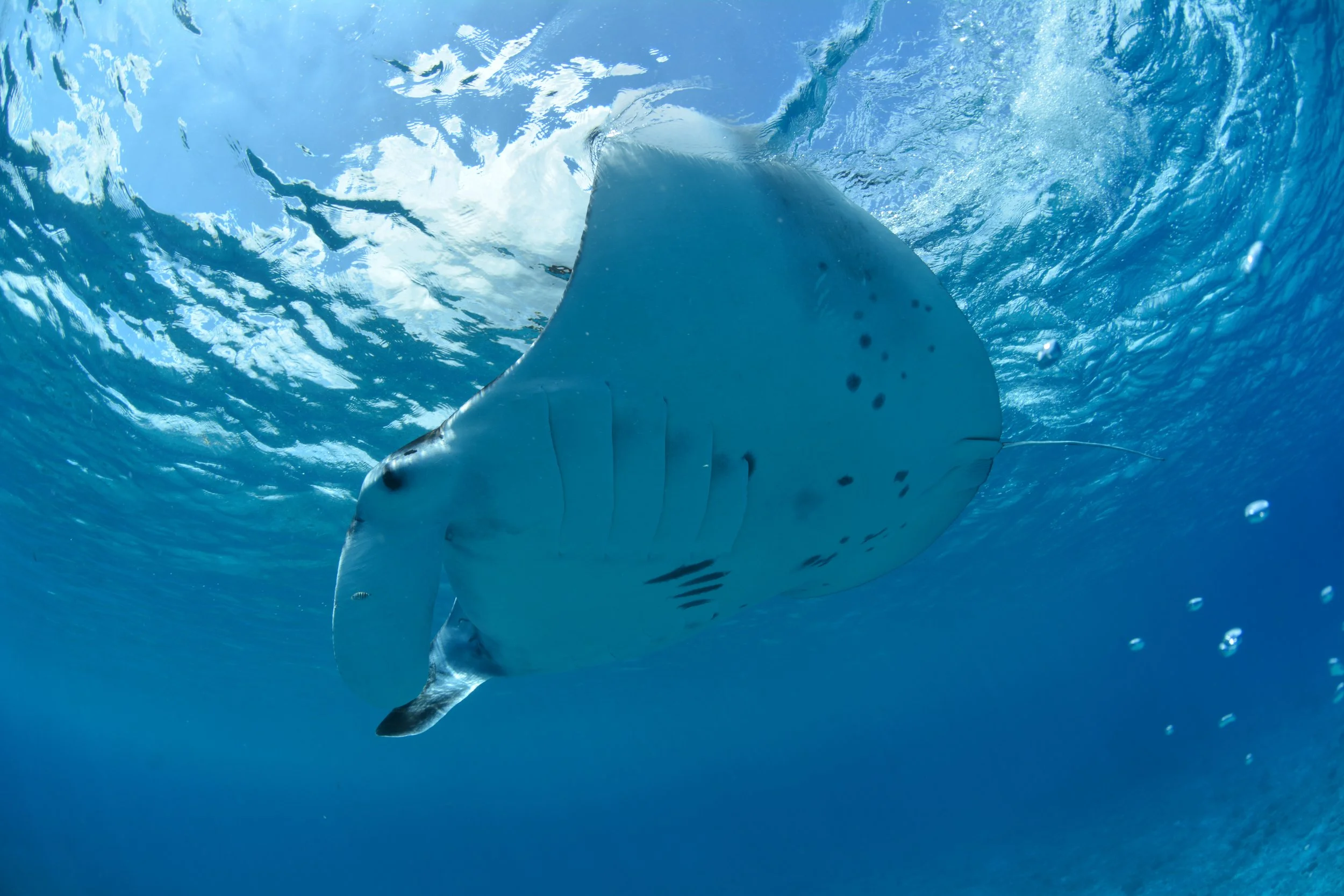
Photo by: Robert Bullock | © Save Our Seas Foundation.
FOR MANTA TRUST MEDIA ENQUIRIES
Contact: Jasmine Corbett
Manta Trust Media and Communications Manager
Email: jasmine.corbett@mantatrust.org
Press Release Credits
Written by: Save Our Seas Foundation
Images: Photographer’s credit below images – ensure that credit is given if images are used
About the Manta Trust
The Manta Trust is a UK-registered marine conservation charity dedicated to the research and protection of manta and devil rays and their habitats. Through research, education, and collaboration, the Manta Trust works to ensure a sustainable future for these extraordinary creatures.