

June 2026
New Study Reveals Major Economic Value of Maldives Manta Tourism
© Simon Hilbourne
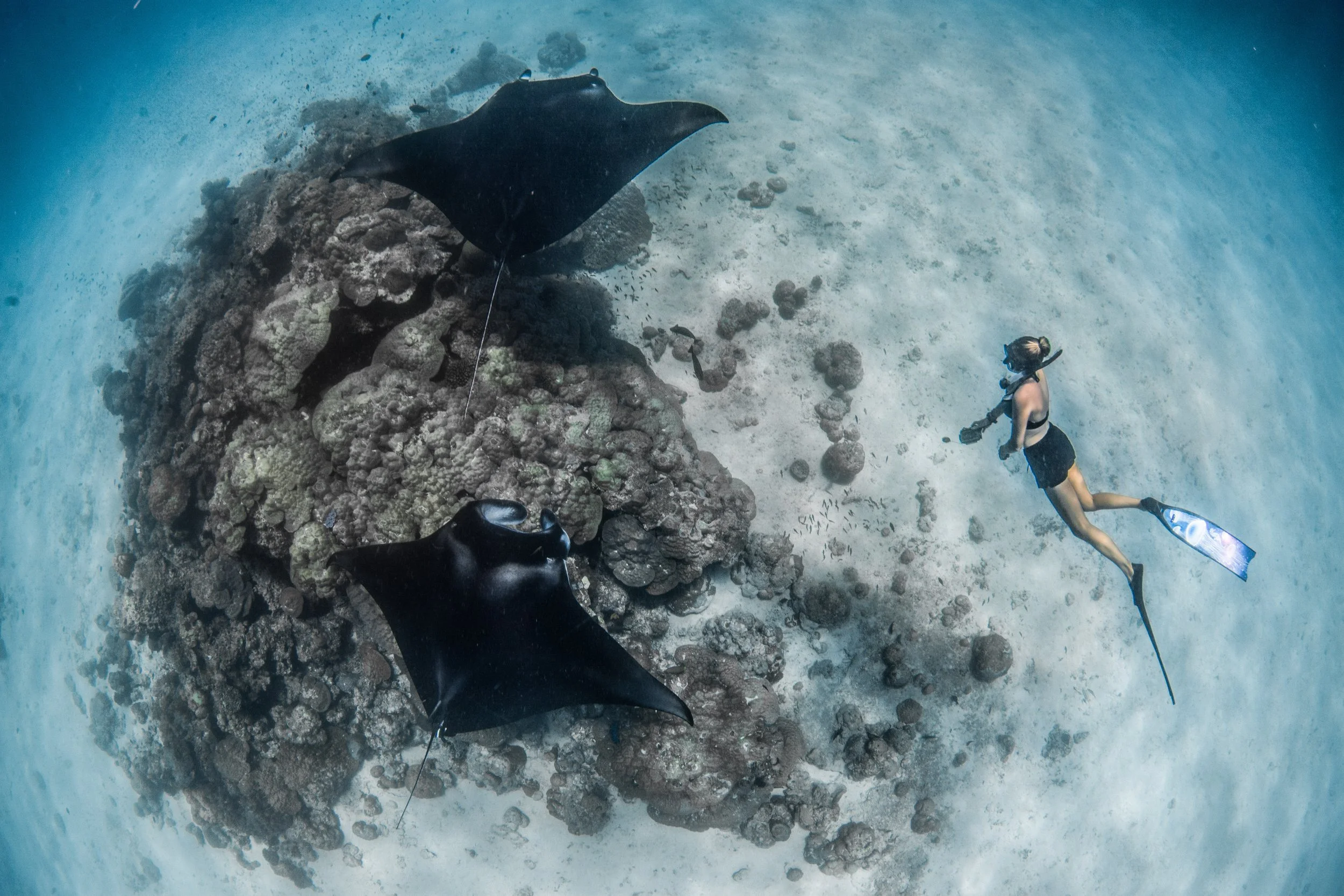
A landmark new study led by the Manta Trust and an international team of researchers has revealed the extraordinary economic value of manta ray tourism in the Maldives - positioning these iconic animals as one of the country’s most valuable natural assets.
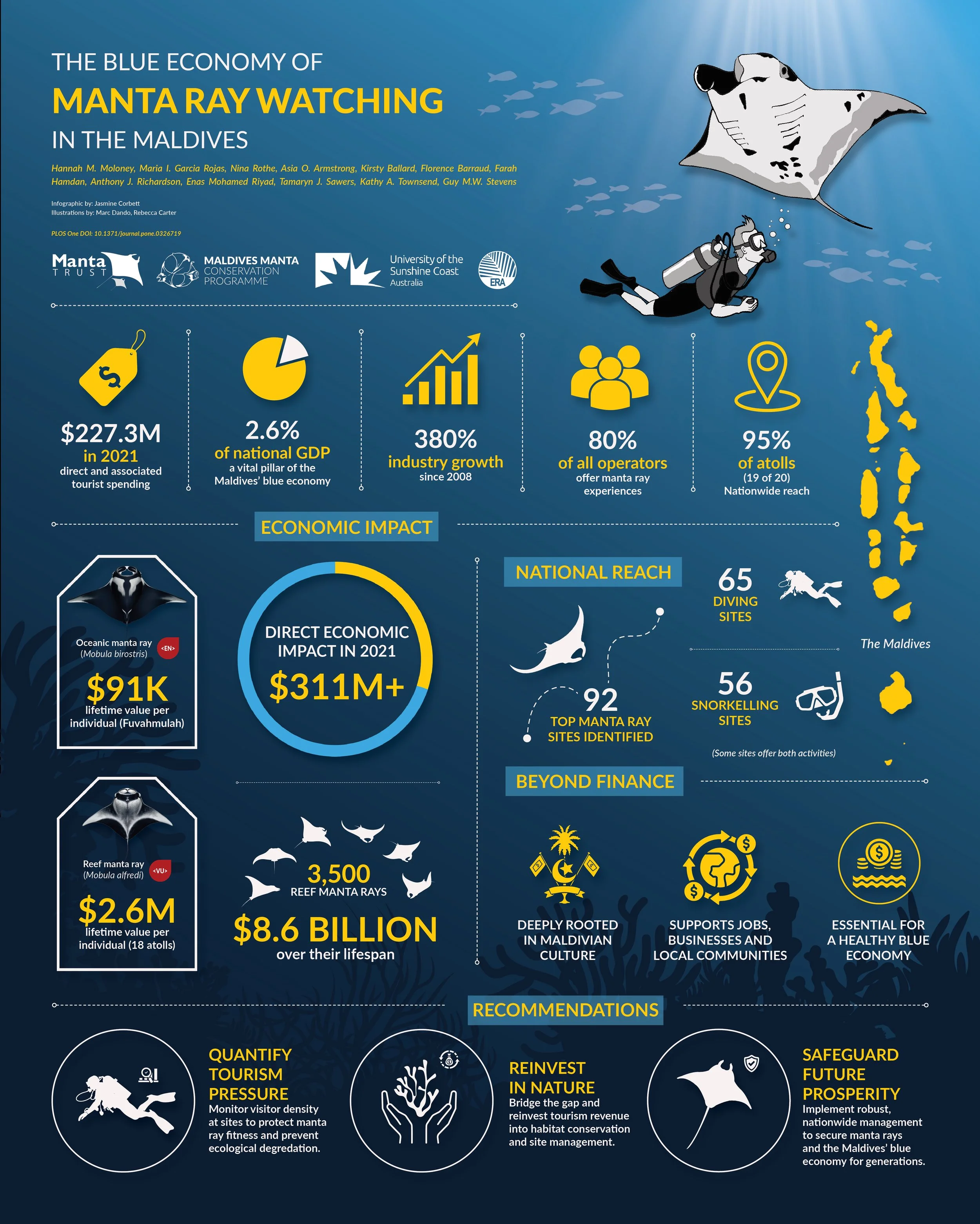
Published on June 1st in PLOS One, Valuing conservation and natural wealth: The blue economy of manta ray watching in the Maldives provides an updated national valuation of the direct economic and socio-economic benefits of manta ray watching (MRW), based on tour operator surveys and data mining. The study estimates that manta ray tourism generated US$227.3 million in 2021, representing 2.6% of the Maldives’ national GDP, with a total economic impact exceeding US$311 million annually when indirect spending is included.

© Jasmine Corbett
Most strikingly, the research finds that the Maldives’ population of approximately 3,500 manta rays is projected to generate US$8.6 billion in tourism revenue over their lifetimes - with individual reef manta rays contributing up to US$2.6 million each through repeated tourism encounters.
“The reason it's important to put a monetary value on wildlife like manta rays is that a lot of stakeholders, including politicians and other decision-makers, speak in terms of money. They understand when there is an economic value attached to an animal or an ecosystem,” said Hannah Moloney, Lead Author and PhD Candidate at the University of the Sunshine Coast. “If you can put a value on an animal, they're often more likely to react, and that can help drive positive conservation outcomes.”
© Jasmine Corbett
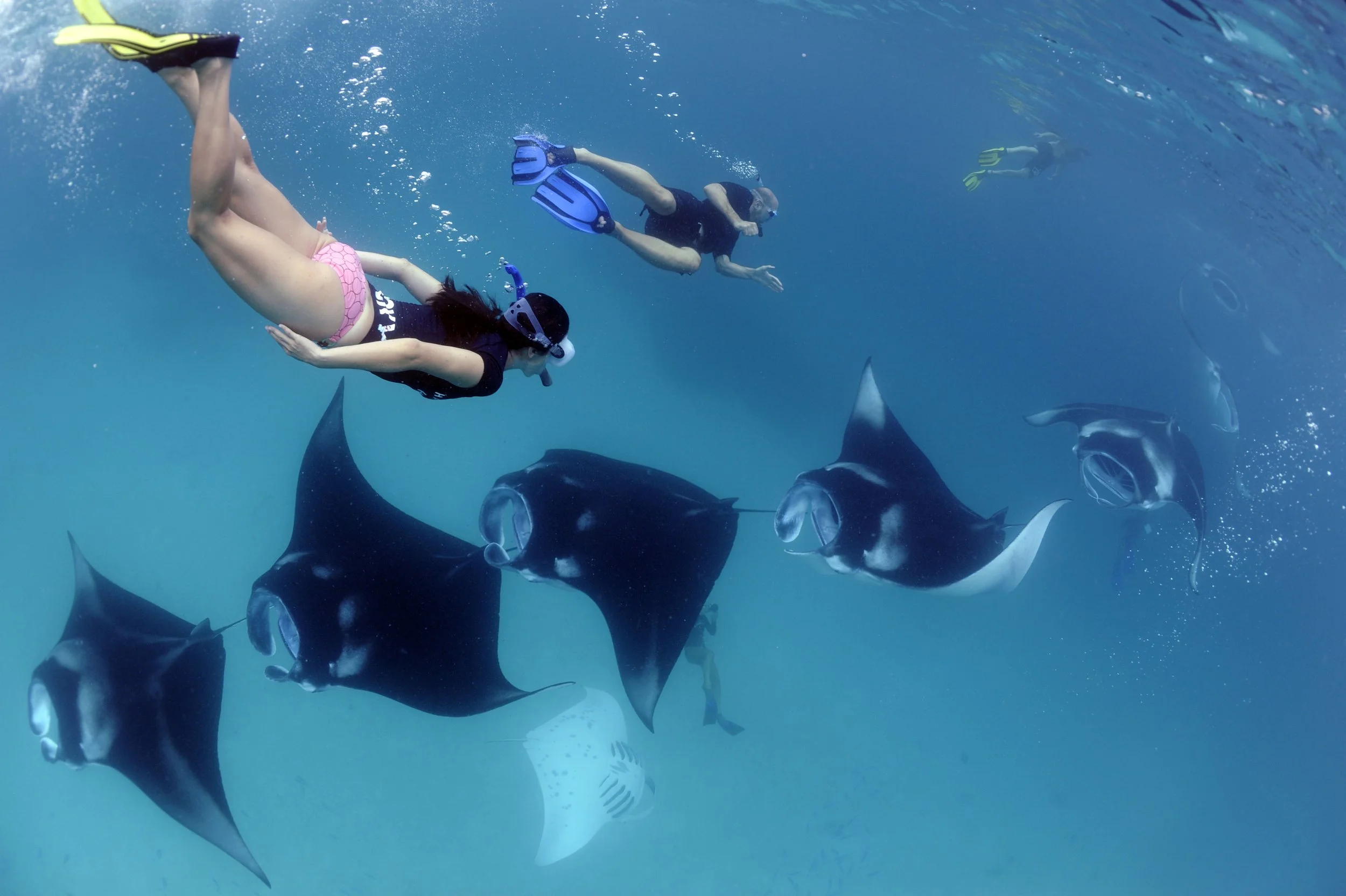
The study highlights the rapid expansion of manta ray tourism, which has grown by approximately 380% since 2008 and now operates across 95% of the country’s administrative atolls, with 80% of tour operators nationwide offering manta encounters. In total, operators identified 92 key manta sites used for diving and snorkelling, reflecting both the scale and accessibility of this wildlife tourism industry.
While manta rays have long held cultural significance in the Maldives, the findings underscore their role as economic cornerstones - supporting jobs, local businesses, and government revenue. However, the authors warn that this rapid growth also raises important questions about sustainability and long-term management.
© Guy Stevens
“What this study really shows is that manta rays are not just a conservation priority, but a national economic asset,” said Dr Guy Stevens, Chief Executive and Co-Founder of the Manta Trust. “With that comes a responsibility to manage these populations properly - ensuring tourism is sustainable, key habitats are protected, and enough of the revenue they generate is reinvested back into their long-term survival.”
Despite the substantial revenue generated by manta ray tourism, the study identifies a critical gap between the economic value of these animals and the level of investment in their protection. The authors call for greater reinvestment of tourism income into conservation, including the protection of key aggregation and foraging sites, improved monitoring of tourism pressure, and the implementation of nationwide management strategies to safeguard manta populations.
© Simon Hilbourne
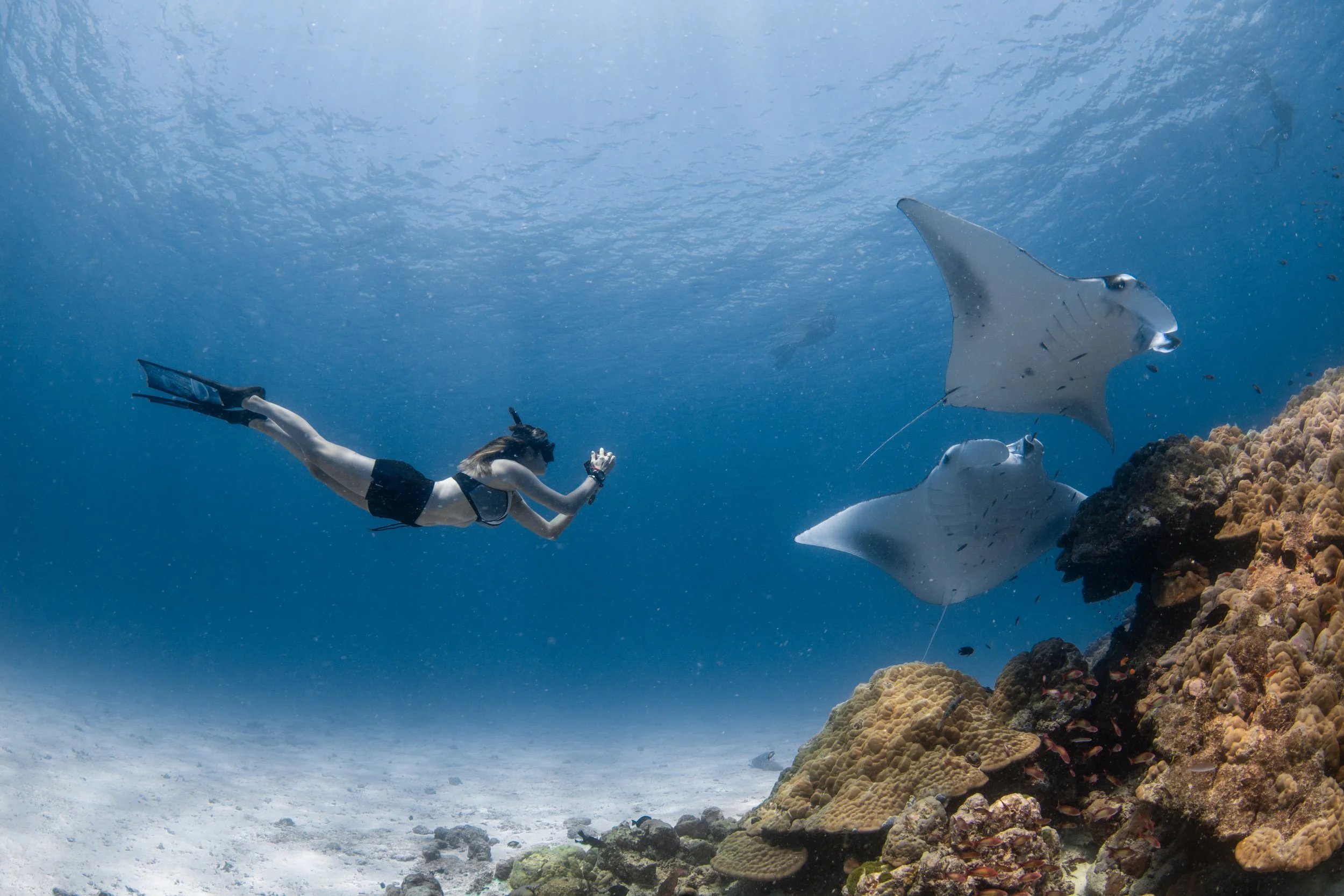
The research also emphasises the importance of quantifying visitor pressure at manta ray watching sites, noting that while the industry is widespread, its ecological impacts remain poorly understood. Without careful management, increasing tourism could risk undermining the very populations that sustain it.
“The manta tourism industry is growing rapidly, and with that growth comes increasing pressure on manta rays and their habitats,” said Hannah Moloney. “It's really important that we identify which sites are under the most pressure and understand where the greatest risks are, so we can take action to protect those areas before the impacts become more serious.”

© Guy Stevens
As global interest in wildlife tourism continues to grow, the Maldives offers a powerful example of how marine species can underpin national economies. The authors argue that recognising the full economic value of manta rays provides a compelling case for their protection - not only as a conservation priority, but as a strategy for securing long-term economic resilience.
FOR MEDIA ENQUIRIES
Contact: Jasmine Corbett
Manta Trust Media and Communications Manager
Email: jasmine.corbett@mantatrust.org
Press Release Credits
Written by: Jasmine Corbett
Images: Photographer’s credit below images – ensure that credit is given if images are used
About the Manta Trust
The Manta Trust is a UK-registered marine conservation charity dedicated to the research and protection of manta and devil rays and their habitats. Through research, education, and collaboration, the Manta Trust works to ensure a sustainable future for these extraordinary creatures.